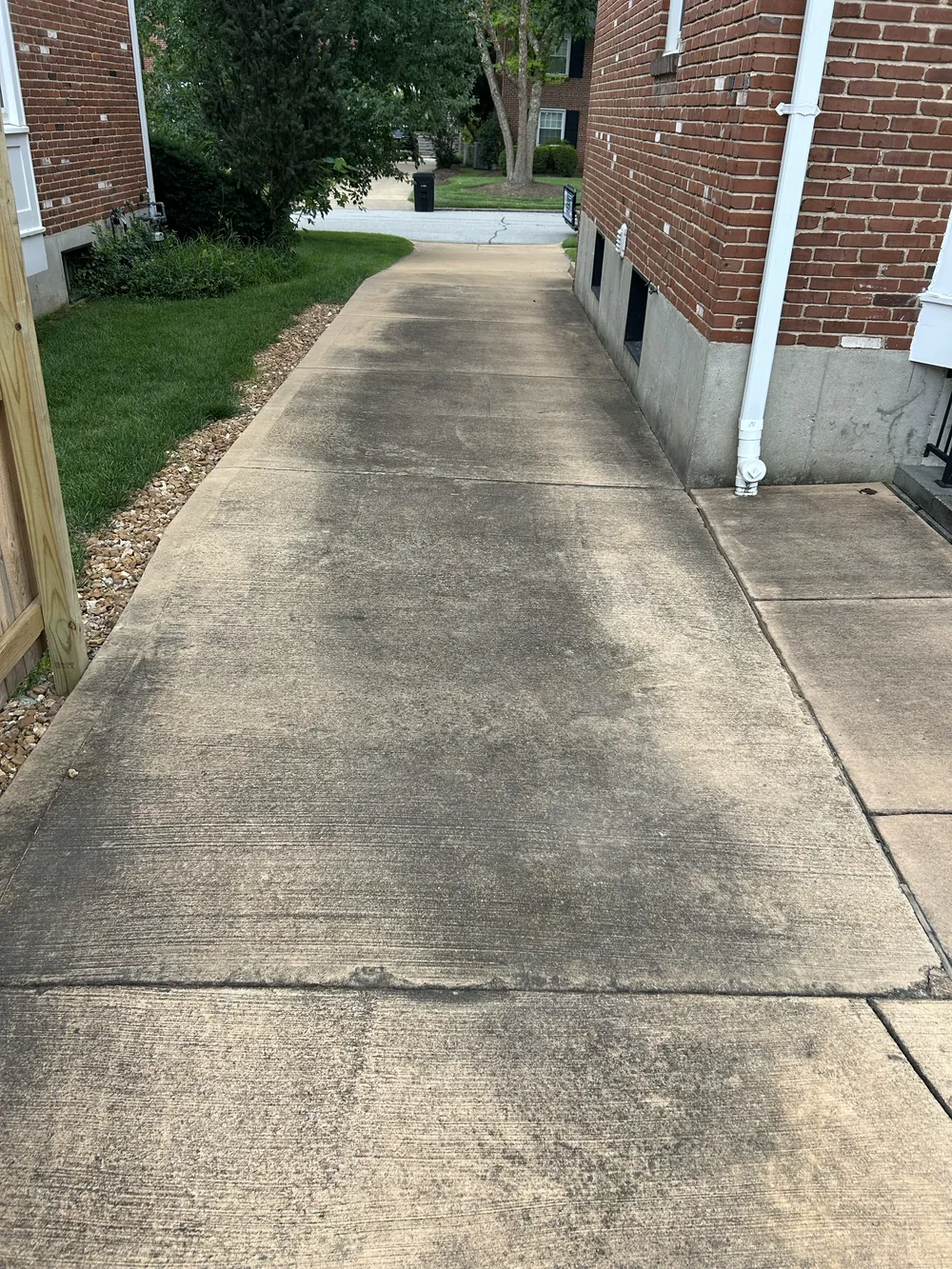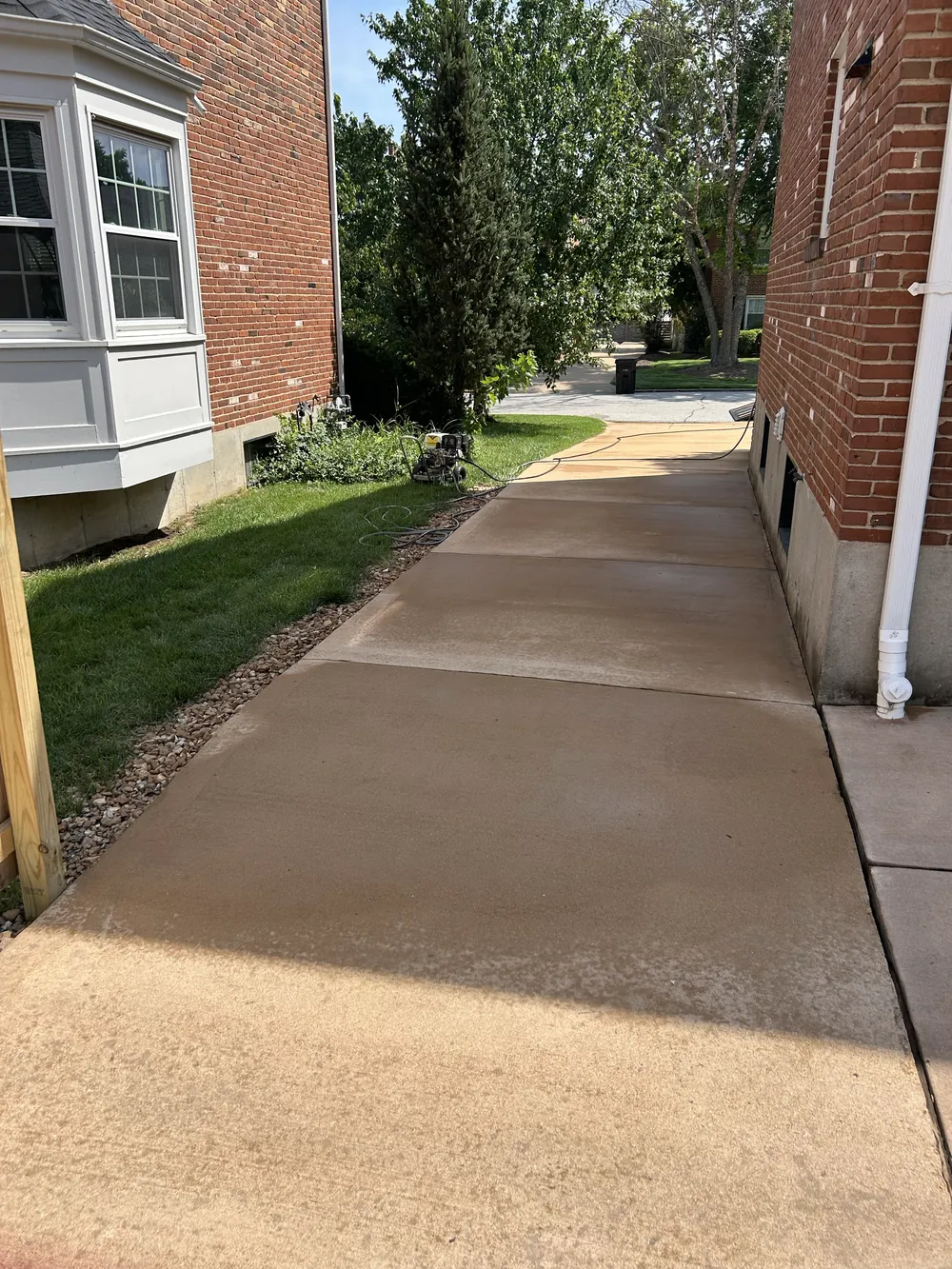
Advice for St. Louis homeowners
How to Pressure Wash Your Driveway Without Wrecking It
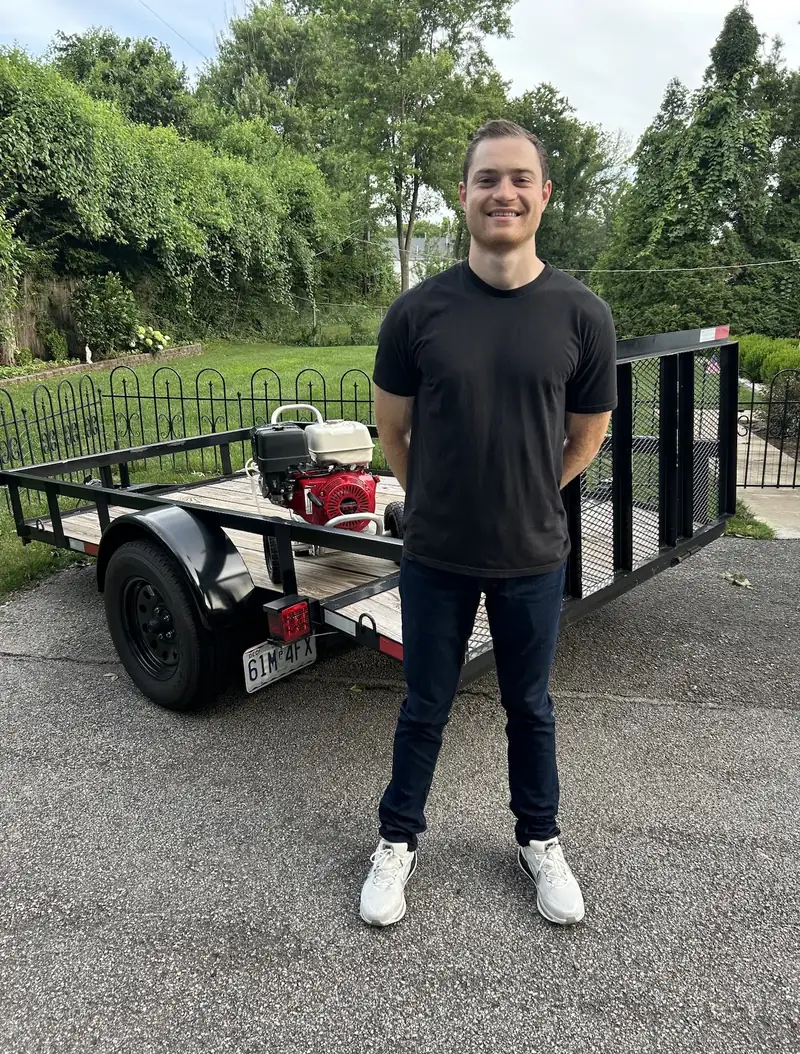 By Jack, owner of Prime Power Wash · July 2026
Your driveway is probably the dirtiest thing you own. You just stopped seeing it. It turned gray so slowly, one season at a time, that eventually gray started to look like the color it came in.
St. Louis is especially hard on concrete. Winter salt settles into it. Spring brings pollen and tree sap. Then summer humidity feeds the mildew growing anywhere the sun cannot reach. That black or green tint on the shady side is not just ugly. It can get slick when it rains.
Cleaning it is a manageable weekend project, but concrete is easier to damage than most people realize. A few mistakes do not wash away. They get carved into the surface. Here is how to do it correctly from start to finish.
What you will need
- A pressure washer suitable for concrete. A machine rated around 3,000 PSI is usually enough, but technique matters more than using every bit of that pressure.
- A 25-degree nozzle, usually the green tip.
- Concrete degreaser for oil stains.
- A stiff push broom.
- Safety glasses and closed-toe shoes.
Step 1: Sweep it first
Sweep off all the leaves, grit, and loose dirt before the water comes out. It sounds pointless, since you are about to blast the thing anyway, but loose grit under a pressure washer acts like sandpaper, and you will spend the afternoon grinding it around in circles instead of cleaning.
Step 2: Soak your plants
Spray down the grass and bushes along the edges with plain water before you start, and give them another rinse when you finish. Cleaning runoff can be hard on plants, and pre-wet leaves are less likely to absorb it.
Step 3: Hit the oil spots
Put degreaser on any oil stains and give it ten minutes to work. Scrub it in with the push broom. Do this before the main wash, not after. If a stain has been sitting there for years it has soaked in deep, so get it lighter, make your peace with it, and move on. There is a note about old stains at the bottom.
Step 4: Wash with long, even passes
Start with the 25-degree green tip and hold the wand about a foot above the concrete. Test a small, less-visible section before doing the entire driveway.
Once you are comfortable with the distance, work in long, straight passes with a little overlap between each one, similar to mowing a lawn. Keep the wand moving at a steady speed. Stopping in one place, even briefly, can leave a pale mark or cut a visible line into the surface. You usually cannot wash a mark like that back out, because it is damage rather than dirt.
Never use the red 0-degree tip on a driveway. It concentrates the water into a narrow stream and can carve concrete surprisingly fast.
Work one section at a time, but plan to finish the entire driveway that day. If you stop halfway, the dividing line between the clean and dirty concrete will be obvious every time you pull in. A standard two-car driveway takes a couple of hours.
Step 5: Rinse downhill
Rinse everything toward the street, never toward the garage or the foundation. Then give the plants that second rinse you promised them.
A warning for St. Louis homeowners. Avoid pressure washing immediately before freezing weather. Concrete is porous, and the water left behind can freeze, expand, and contribute to surface flaking called spalling. Repairing spalled concrete can become expensive quickly. As a practical rule, try to finish fall cleaning by mid-October rather than waiting for the first cold snap.
Four ways people permanently damage concrete. Uneven passes that leave zebra stripes. Holding the tip too close and etching a pale spot. Blasting the filled seams between slabs straight on, which digs out the filler and lets water get underneath, where it freezes and lifts. And running high pressure over stamped, colored, or sealed concrete, which strips the finish in patches.
When to just call someone
Most ordinary driveways are completely reasonable DIY projects. But there are a few situations where I would tell a homeowner not to risk it.
- The oil stains are several years old. Once oil has soaked deeply into concrete, cold-water pressure washing alone usually will not remove it evenly.
- The concrete is stamped, colored, or sealed. Decorative finishes are easier to strip or discolor, and repairing them costs far more than cleaning them correctly the first time.
- The mildew returns every year. Pressure removes what you can see, but an appropriate post-treatment can slow down how quickly it comes back.
- You would need to rent everything. By the time you pay for the machine, chemicals, fuel, and several hours of your weekend, professional cleaning may not cost much more.
The goal is not to use the strongest machine or stand closest to the concrete. It is to clean the surface evenly without changing the surface itself. Take your time, use the right nozzle, and let consistent passes do the work.
And if you look at the driveway Saturday morning and decide you would rather keep your Saturday, that is what we are here for.
Rather spend your Saturday on something else?
This is what Jack does every day, all over St. Louis. Estimates are free and take about five minutes.