Advice for St. Louis homeowners
How to Clean Your Pool Deck Without Trashing the Pool
 By Jack, owner of Prime Power Wash · July 2026
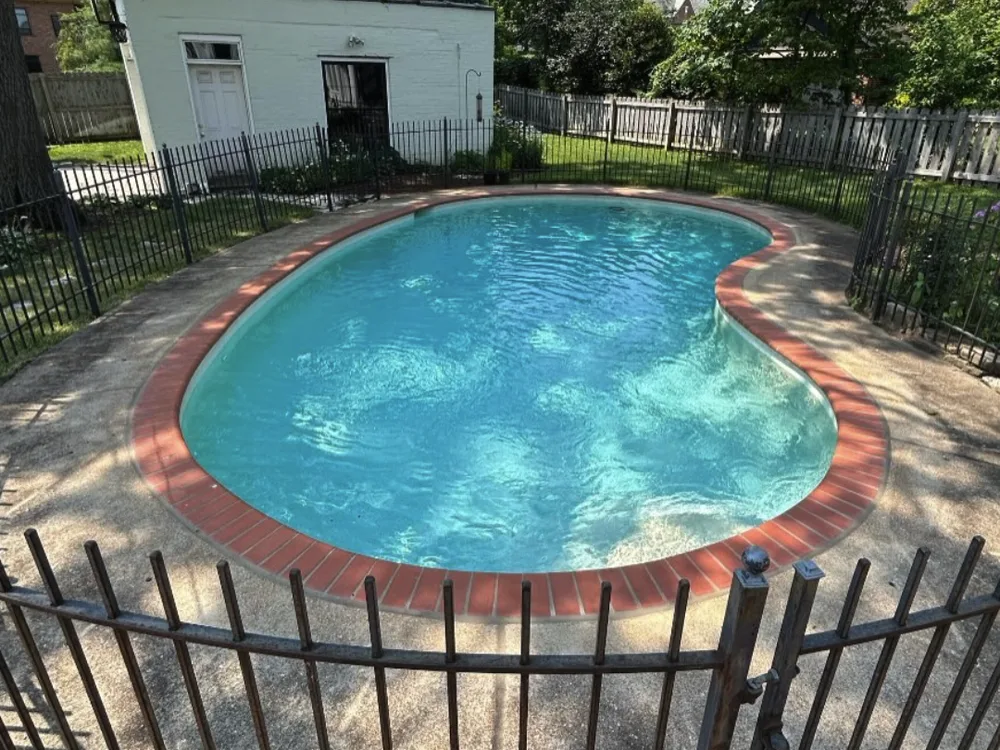
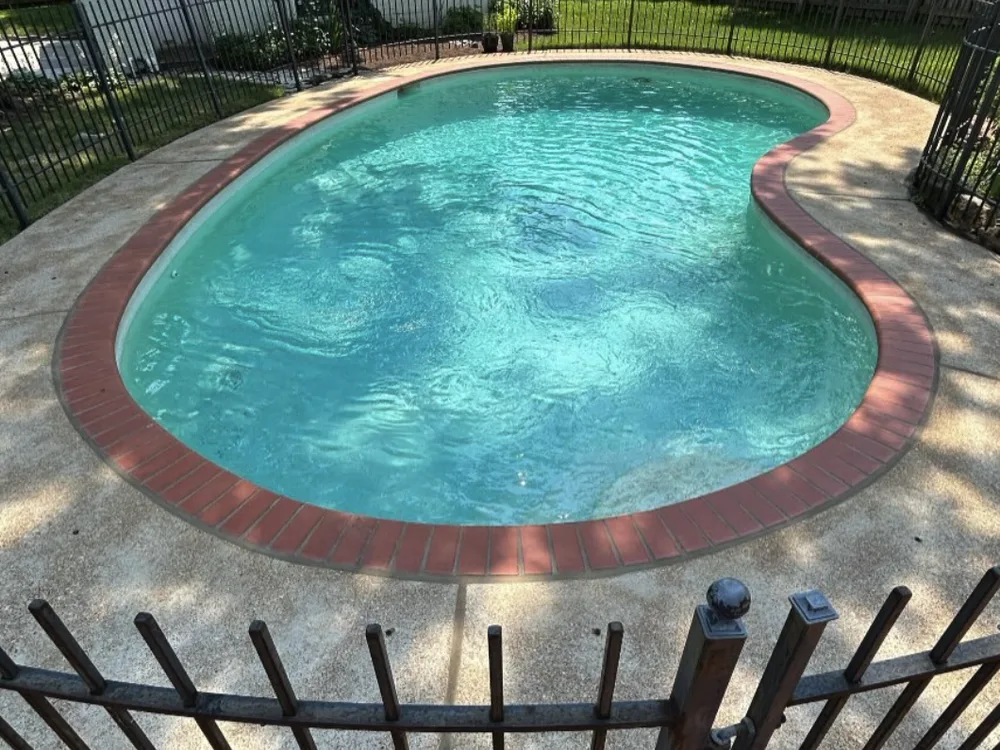
The slipperiest surface at your house is the one everybody walks on barefoot. By the end of July, most pool decks around St. Louis have grown a thin film of algae you can barely see. You can feel it, though. It is that spot near the steps that got a little slick back in June and never really dried out.
We have cleaned a few pool decks around town this month, and every one of them looked fine from the patio door. Up close is a different story. Splash water keeps the concrete damp all day, our humidity handles the rest, and any shade from a fence or an umbrella gives the green film a place to settle in. A dirty driveway is an eyesore. A dirty pool deck is where somebody's kid goes down at a full run.
The catch is that a pool deck is the one surface you cannot just blast and hose off without thinking, because everything you rinse is a few feet from the water. Soap, grit, and joint sand all want to end up in the pool. Here is how to get the deck clean without spending the next week fighting your water chemistry.
First, figure out what your deck is made of
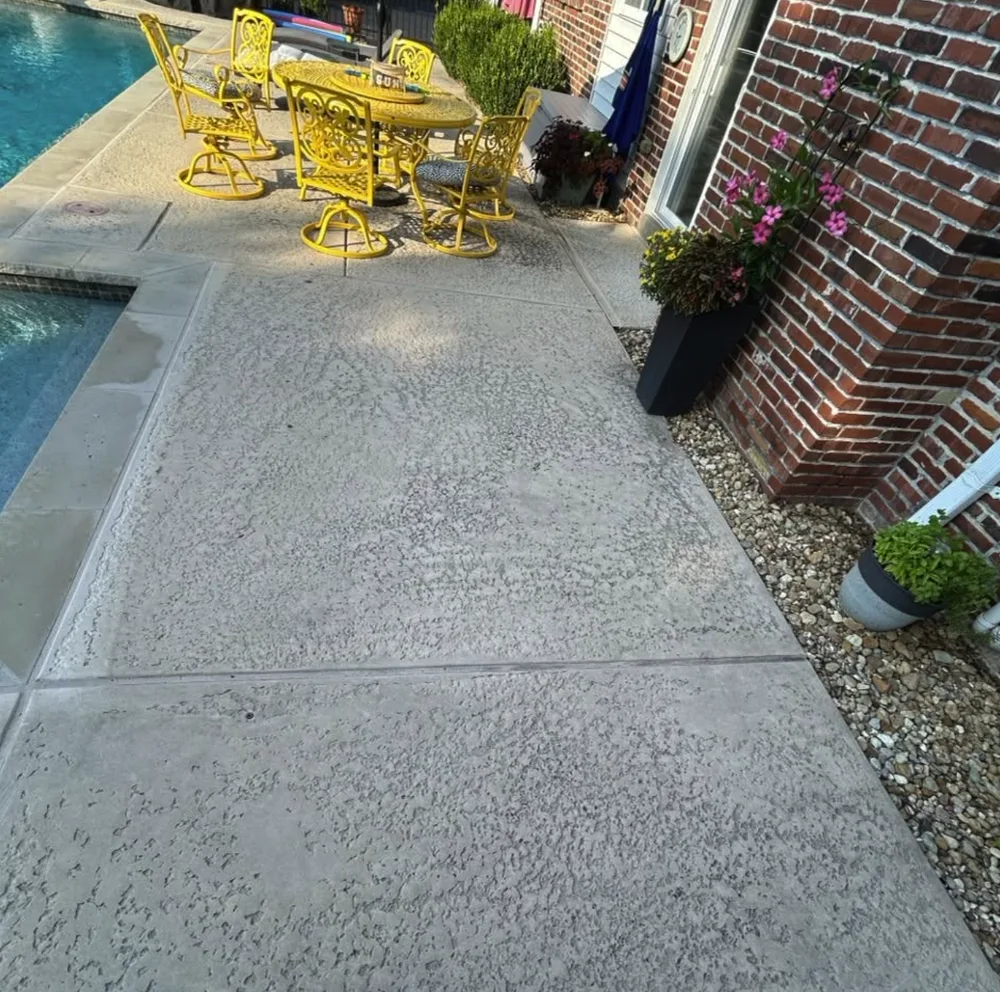
This matters more than anything else in this article. Plain broom-finished concrete can handle a pressure washer used correctly. Textured coatings like Kool Deck, painted concrete, and stamped or colored finishes cannot take nearly as much, and pavers bring their own problem, which is the sand in the joints. If you are not sure what you have, start gentler than you think you need to.
What you need
- A pressure washer with the 25-degree green tip for plain concrete, or the white 40-degree tip for anything coated or textured.
- A stiff deck brush on a pole for the stubborn spots.
- Plain water does most of this job. If you do use a cleaner, pick one made for outdoor concrete and skip anything sudsy. Detergent in the pool feeds the next algae bloom.
- Your pool skimmer and test kit for afterward.
Step 1: Clear the deck and protect the pool
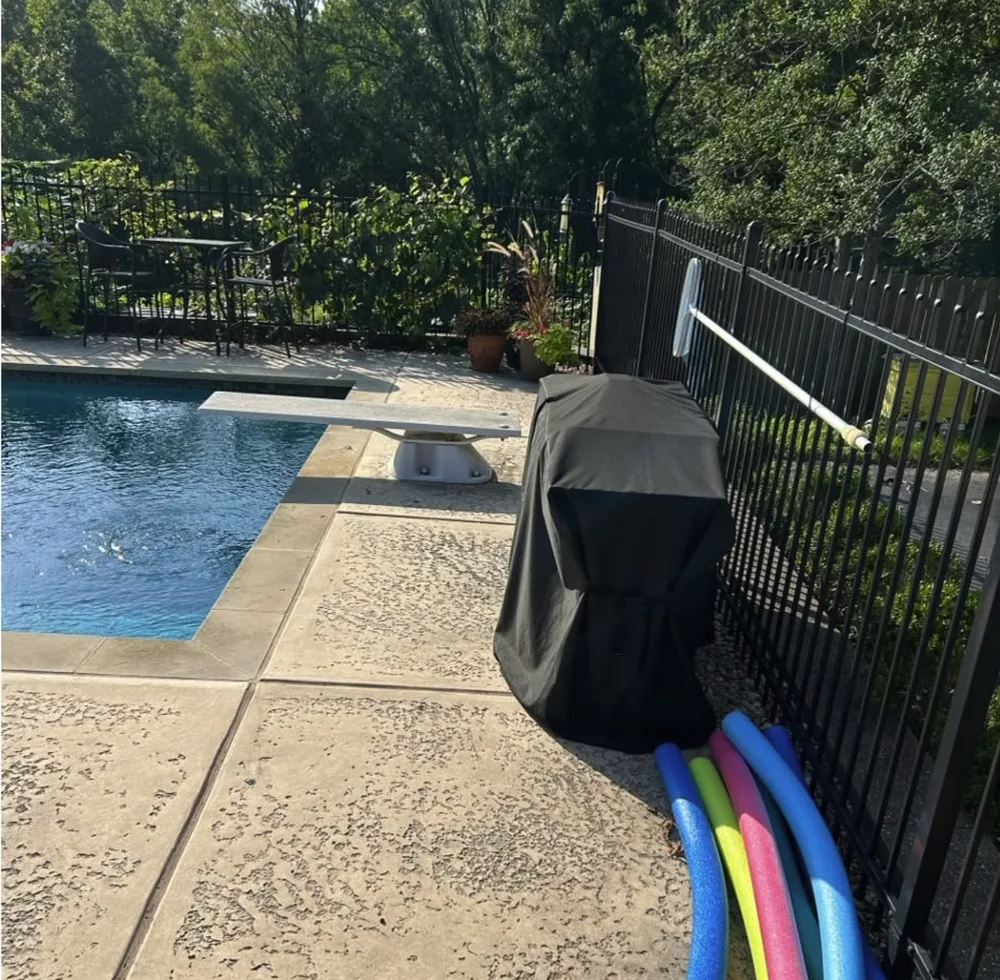
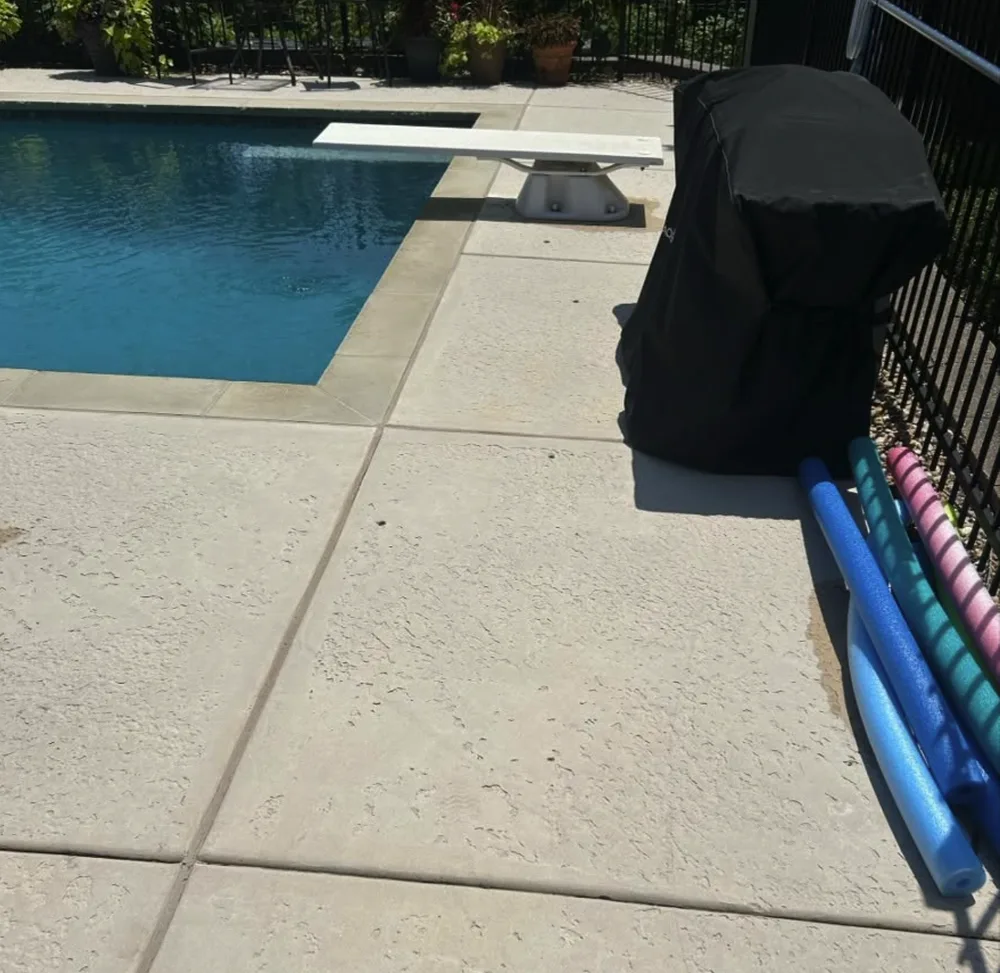
Furniture, toys, planters, and the floats all come off. If you have a cover, put it on. If not, that is not a dealbreaker, but plan on skimming when you are done and expect a little debris in the water no matter how careful you are.
Step 2: Sweep, then rinse the plants
Sweep off the leaves and grit first, because dragging them around under pressure just grinds them into the surface. Then rinse any landscaping around the deck with plain water before and after, same as any wash job, so the runoff sheets off the leaves instead of soaking in.
Step 3: Wash away from the water
Start at the pool edge and work outward, pushing the dirty water toward the yard or the deck drains instead of toward the pool. Use long, even passes with a little overlap, the same way you would mow a lawn, and keep the wand moving. On plain concrete, hold the green tip about a foot off the surface, and test a small spot under where the furniture usually sits before committing to the whole deck.
Step 4: Ease up around the coping
The joint where the deck meets the pool coping is usually filled with a flexible caulk called mastic, and a pressure washer will peel it right out of there if you hit it directly. That joint is doing a real job. It keeps water from getting under the coping and behind the pool wall. Wash up to it at an angle rather than along it, and let the brush handle the last few inches.
Step 5: Brush what the pressure should not do
Black spots, the shaded strip along the fence, and anything coated or textured get the brush and a little patience instead of a closer nozzle. Closer does not mean cleaner on a pool deck any more than it does on a driveway. On a coating, closer means bare patches.
Step 6: Skim, then test the water
When you are done, skim out whatever made it into the pool and run your normal water test that evening. If a little dirty runoff got in, the filter and your regular chlorine will usually handle it without drama. If a cleaner got in, you may be shocking the pool sooner than you planned, which is exactly why plain water is the right starting point.
Worth doing while it is clean: most concrete sealers get slick when wet, which is the last thing a pool deck needs. If you seal, use a penetrating sealer or ask for a non-slip additive mixed in. The deck stays easy to clean without turning into a skating rink.
The mistakes that cause real problems
- Blasting a textured coating. Kool Deck and paint strip off in patches, and matching the repair is harder than cleaning it right the first time.
- Blowing out the mastic joint. That gives water a path under your coping, and the repair costs real money.
- Stripping the sand out of paver joints. The pavers loosen up, and half the sand ends up on the bottom of the pool.
- Sudsy cleaners near the water. Foam and phosphates are fertilizer for pool algae.
- Waiting until somebody slips. The film is easiest to remove while it is thin, and removing it costs a lot less than a trip to urgent care.
When to just call someone
A plain concrete pool deck is a reasonable Saturday project. A few situations are worth handing off.
- The deck is Kool Deck, painted, stamped, or colored. Decorative surfaces are easy to scar and expensive to match.
- There are rust or calcium stains. Those need the right treatment, not more pressure.
- It is a paver deck. Cleaning it properly usually means re-sanding the joints afterward.
- You would rather not gamble with the water chemistry in the middle of swim season.
The goal is a deck your kids can run on, or at least one that will not put them down when they do. Work away from the water, respect the coping joint, and let the brush handle the delicate parts.
And if the pool is getting used every day and you would rather keep your Saturday in it instead of beside it, that is what we are here for.
Rather spend your Saturday in the pool, not beside it?
This is what Jack does every day, all over St. Louis. Estimates are free and take about five minutes.