Advice for St. Louis homeowners
How to Clean Your Deck Without Ruining the Wood
 By Jack, owner of Prime Power Wash · July 2026
Here is the thing nobody tells you about deck cleaning. The pressure washer is not the tool. The cleaner is the tool, the thing doing the actual work, and the pressure washer is just there to rinse it all off once the job is basically done.
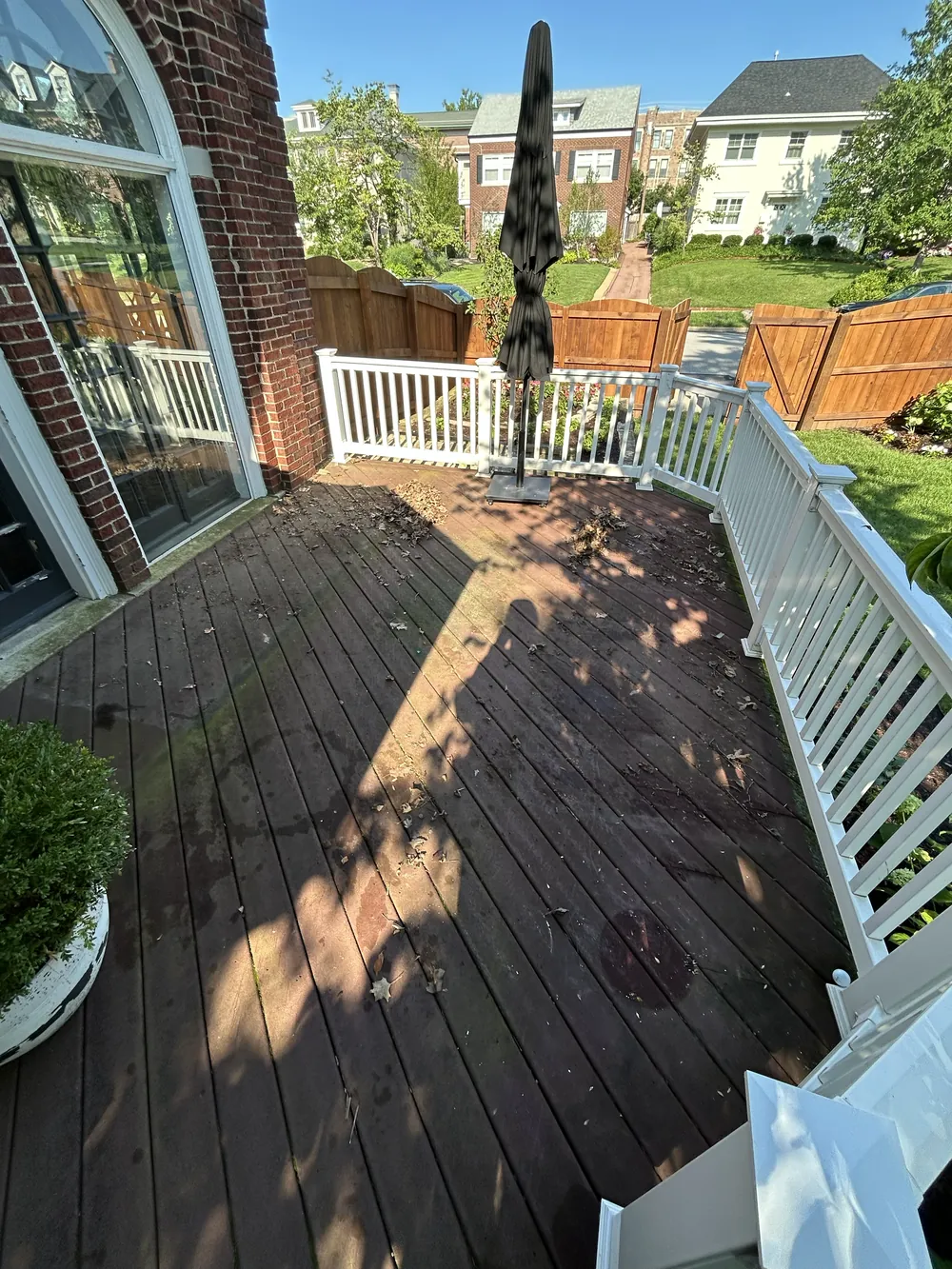
Wood is soft. Concrete can take 3000 PSI all day long, but deck boards cannot, and if you blast a deck the way you blast a driveway, the surface fuzzes up like a tennis ball, splinters, and drinks up water for the rest of its life. Every summer I see decks around St. Louis that somebody ruined in one well-meaning afternoon.
And St. Louis is rough on decks in its own special way. Our humidity grows a green film on anything shaded by the middle of July. Those black spots down in the grain are mildew that has put down roots. Every winter, the freeze and thaw pries open every little crack that water can find, a bit wider each year. So the goal is simple. Get the growth out of the wood gently, and get protection onto it before the weather comes back.
What you need
- A deck cleaner that says oxygenated or sodium percarbonate on the jug. Not chlorine bleach. More on that below.
- A pump sprayer, or a bucket and a stiff brush on a pole.
- A garden hose, or a pressure washer with the widest tip it came with. That is the white 40-degree one.
- A free afternoon, plus two dry days after if you plan to stain or seal.
Step 1: Clear it and sweep it
Everything comes off the deck. Furniture, grill, planters, the rug. Then sweep out the gunk between the boards with a putty knife or a screwdriver, because wet leaf sludge sitting in those gaps is exactly where rot gets its start.
Step 2: Wet the plants
Same as any wash job. Rinse the plants around the deck with plain water before and after, so the runoff sheets off them instead of soaking in.
Step 3: Put the cleaner on and let it work
Mix the cleaner the way the jug tells you and put it on with the sprayer. Then wait ten or fifteen minutes. Do not let it dry on the wood, though. On a hot July day in St. Louis that happens faster than you would think, so work one section at a time and keep it damp. You will see the green film start lifting all on its own, and that right there is the cleaner doing the job your arms were about to do.
Step 4: Scrub where it needs it
Hit the black spots and the traffic paths with the brush, and always scrub with the grain. Direction matters more than muscle. Going across the grain drives the mildew deeper and scratches the surface on the way.
Step 5: Rinse gently
A garden hose with a strong nozzle honestly does the job. If you want the pressure washer, put on the white 40-degree tip, stay about two feet off the wood, and keep the wand moving with the grain. You are rinsing cleaner off the boards, not carving. If you can see the spray raising fuzz on a board, you are too close.
Step 6: Let it dry, then protect it
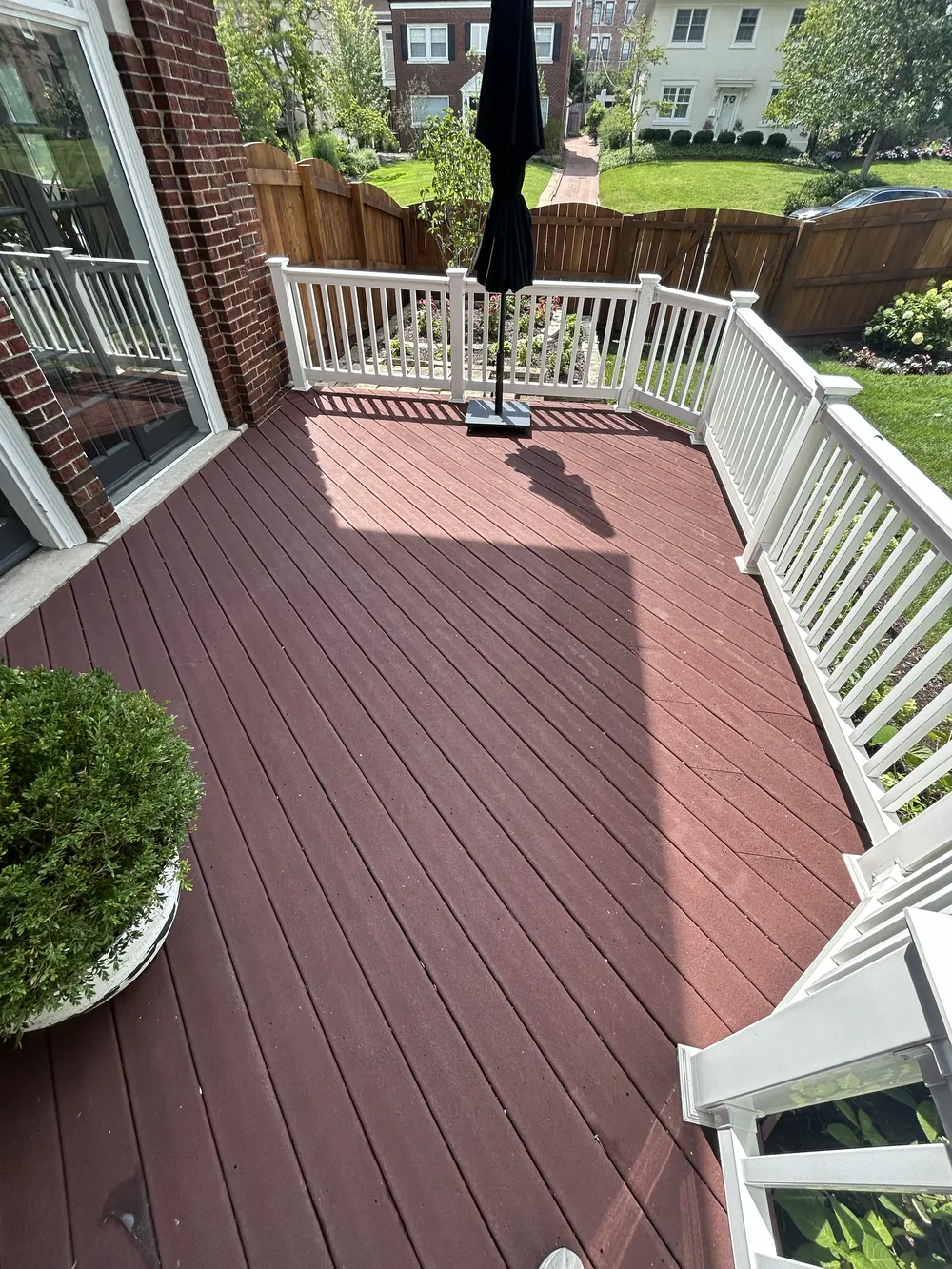
Give it two full days of dry weather, then get stain or sealer on it. Clean bare wood with nothing on it starts growing mildew again within a month. In St. Louis your good windows are late spring, after the pollen finally quits, or early fall while the days are still warm but the air has dried out. Sealing damp wood traps the moisture inside, where it peels the finish and feeds rot, so do not rush this part.
Why not chlorine bleach? It kills the surface mildew, sure. It also breaks down the fibers of the wood, grays it out, corrodes your deck screws, and cooks every plant the runoff touches on its way through the yard. The oxygenated stuff cleans without doing any of that, and it costs about the same. There is no good reason to put chlorine on wood.
The mistakes that ruin decks
- Too much pressure. Fuzzy, splintered boards do not sand back easily. This is the big one.
- The wrong tip. Yellow and red are for concrete and steel. Wood gets the white one, every time.
- Chlorine bleach. See above.
- Sealing it wet. Trapped moisture peels the finish off from underneath and feeds rot you cannot see.
- Skipping the protection step. Clean wood with no seal on it means doing this whole job again next summer, on wood that is one year grayer.
When to just call someone
Most decks are a completely reasonable DIY project. But there are a few situations where I would tell a homeowner not to risk it.
- The deck is more than about eight feet off the ground. Wet boards, a ladder and a pressure wand make a bad combination.
- The wood is already gray and furry from an old bad wash. That is restoration work now, not cleaning.
- You want it cleaned and sealed in the same week and the forecast will not sit still. Pros watch weather windows for a living.
- It is attached to a house that needs washing too. One visit, both jobs, done right.
The goal is not more pressure. It is a gentle clean and a good seal, in that order, with enough dry weather in between. Let the cleaner do the work and the wood will pay you back for years.
And if your Saturday is already spoken for, that is what we are here for.
Rather spend your Saturday on something else?
This is what Jack does every day, all over St. Louis. Estimates are free and take about five minutes.